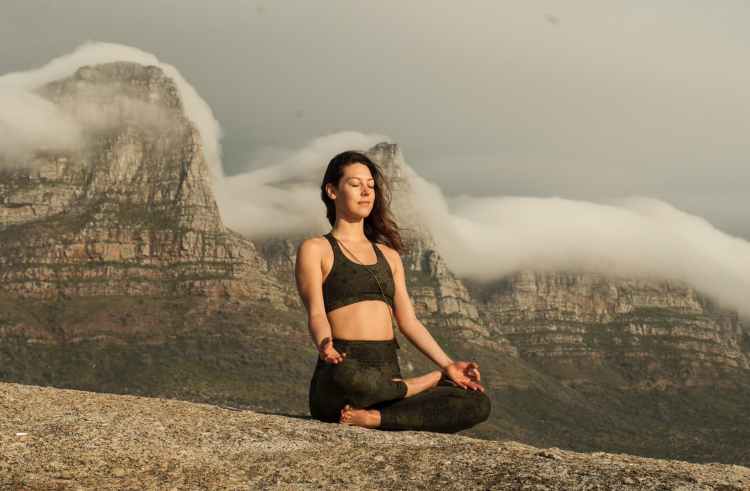
Yoga is becoming popular in all parts of the world. For the restless mind, it gives solace. For the sick, it is a boon. For the common man, it is the fashion of the day to keep himself fit and beautiful. Some use it for developing memory, intelligence, and creativity. With its multifold advantages it is becoming a part of education. Specialists use it to unfold deeper layers of conscious in their move towards perfection.
Yoga is the process of gaining control over the mind. Control involves two aspects – a power to concentrate on any desired subject or object and a capacity to remain quiet any time. All of us have been developing the first aspect, namely concentration. Rarely, the second capacity of man, to remain calm and silent, has been harnessed. Yoga mainly emphasizes this second aspect. For example, an unskilled layman trying to repair a television set is almost sure to spoil it, while an experienced and skilful person knows exactly on what to lay hands and to rectify the malfunctioning. He operates at the right place. Knowledge is the key. Similarly, in the control of the mind, a novice tries hard and gets disgusted when he finds himself more messed up, while Yoga gives him the necessary techniques to operate at the right place at the right time to gain complete mastery. This skill is the trick of allowing the mind to calm down and not use brutal force to stop it.
There are a large number of methods of yoga, catering to the needs of different persons in society to bring about the transformation of the individual. They are broadly classified into four streams
Karma Yoga: This involves doing action with an attitude of detachment to the fruits of action. This makes the man release himself from the strong attachments and thereby brings in him a steadiness of mind which verily is Yoga.
Bhakti Yoga: The control of emotions is the key in the path of worship. In this modern world, man is tossed up and down due to emotional onslaughts. The path of Bhakti is a boon to gain control over emotional instabilities by properly harnessing the energy involved in it.
Jnana Yoga: The age of science has made man a rational being. Intellectual sharpness is immanent. The path of philosophy or Jnana Yoga is apt for the keen intellectuals and is centred around the analysis of happiness. Basic questions are raised even involving the intellect itself to reach the very basis of intellect.
Raja Yoga: Culturing of the mind is the key for success in almost all endeavours in our lives. The yoga of mind culture (or Raja Yoga) gives a practical and easy approach to reach higher states of consciousness. It is based on Astanga Yoga of Patanjali’s yoga system.
The above four streams of Yoga help man toe develop the personality at four different levels – physical, mental, intellectual, and emotional and simultaneously bring about spiritual progress. It is quite likely that a beginner gets confused looking at several methods of yogic practices and wonder which to choose, which will suit him and so on. For this purpose, one must understand there is a basic unity in all these methods since all these paths lead independently to the same goal and same structural transformation takes place in the mind.
Yoga offers man a conscious process to solve the menacing problems of unhappiness, restlessness, emotional upset, hyper-activity etc. in the society and helps to evoke hidden potentialities of man in a systematic and scientific way by which man becomes a fuller individual. All his faculties – physical, mental, intellectual and emotional – develop in a harmonious and integrated fashion to meet the all-round challenge of the modern technological era with its hectic speed. The specialty of yogic processes is that the faculties get sharpened in tune with the spiritual progress of man. Thus Yoga is a vital tool for the development of man, probably more relevant in this modern scientific era than ever before.
 Lotus Yoga